London’s Love Affair with Brutalism Resurfaces
Brutalism, defined by exposed concrete, bold geometry and a focus on function, was long polarising. In London the style once symbolised post-war ambition and later urban neglect. Now a new generation of designers, photographers and cultural institutions has reappraised those raw forms, turning once-derided structures into canvases for contemporary creativity.
Raw Beauty: Why Brutalism Captivates London Today
Several forces explain the revival. The honesty of materials speaks to designers who prize texture and authenticity over gloss. Many Brutalist buildings offer large, flexible interiors that adapt well to galleries, studios and co-working spaces. Reusing these cores can be more sustainable than demolition, so conservation appeals to climate-conscious creatives.
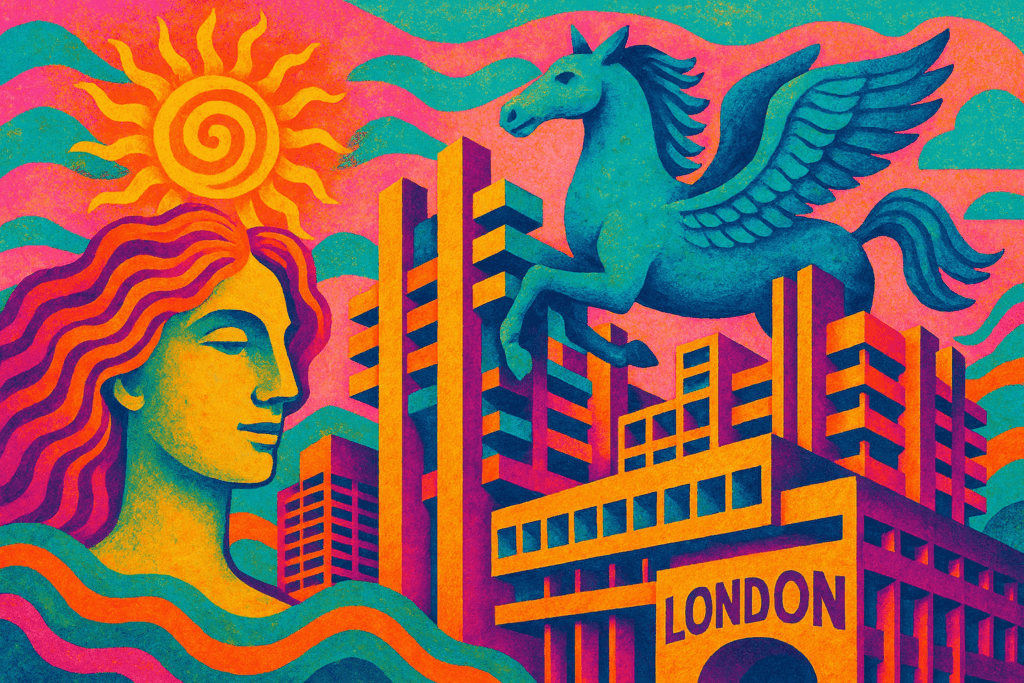
Visual culture plays a role too. The severe lines and dramatic light of places like the Barbican Centre, National Theatre and Trellick Tower make striking backdrops for fashion shoots, editorial photography and social feeds. That aesthetic of rawness also pushes back against polished corporate design, giving brands a distinct, memorable edge.
Beyond Buildings: Brutalism’s Creative Impact
Brutalist influence is visible across London design: graphic work borrowing concrete textures, product packaging in muted palettes, exhibition design that uses heavy geometry to frame artworks, and fashion labels staging shows in concrete venues to emphasise grit and utility.
Smaller interventions matter too. Pop-up galleries and independent cafes often lean into brutalist cues, while creative education programmes use these sites to teach spatial thinking. The style’s association with civic purpose and social housing has inspired projects that pair aesthetics with social mission.
What does this revival reveal about London? It suggests a city confident in its layered past, comfortable mixing heritage with contemporary practice, and hungry for forms that feel real. Next time you walk past a grey façade, look up. That concrete may be the city’s most unexpected asset.