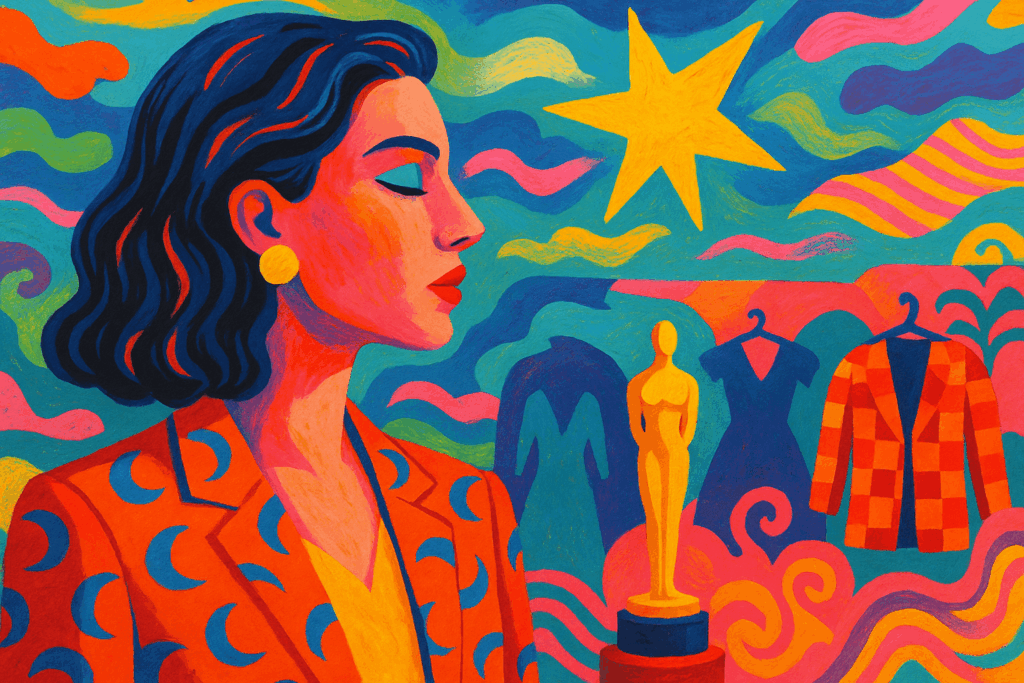
Cinematic wardrobe does more than clothe actors; it speaks, signals and helps tell the story. Costume designers often mirror society—Edith Head put it simply: “the climate and the mood of the world around us.” On screen, clothing becomes a character that shapes identity, desire and memory.
Iconic Eras, Timeless Style
From the silent era to Hollywood’s Golden Age, film created visual shorthand for modernity and glamour. Louise Brooks’ bob and Fritz Lang’s Metropolis pushed futurist aesthetics into mainstream design. In studio-era Hollywood, designers such as Edith Head sculpted star personas: Audrey Hepburn’s little black dress in Breakfast at Tiffany’s and the polished looks in Sabrina became templates for womenswear. Cinema also transformed menswear—Marlon Brando’s leather jacket and James Dean’s rebel silhouette turned everyday garments into enduring symbols.
Reflecting & Shaping Modern Culture
Costume design has tracked social change. Teen films like Clueless translated youth style into high-street demand, while screen portrayals of grunge and hip-hop helped move subcultural dress into mainstream wardrobes. Today film is a marketing engine: tentpole releases create instant trend cycles, collaborations and product drops. The Barbie phenomenon sparked global retail frenzies, and stars such as Zendaya use premieres to reference and amplify cinematic fashion, turning homage into headline-making brand moments.
The relationship between cinema and fashion remains unbroken. What appears on screen informs designers, fuels retail and anchors cultural memory. As filmmakers keep reimagining style, costume remains an unseen star that continues to inspire creativity and define eras around the world.