
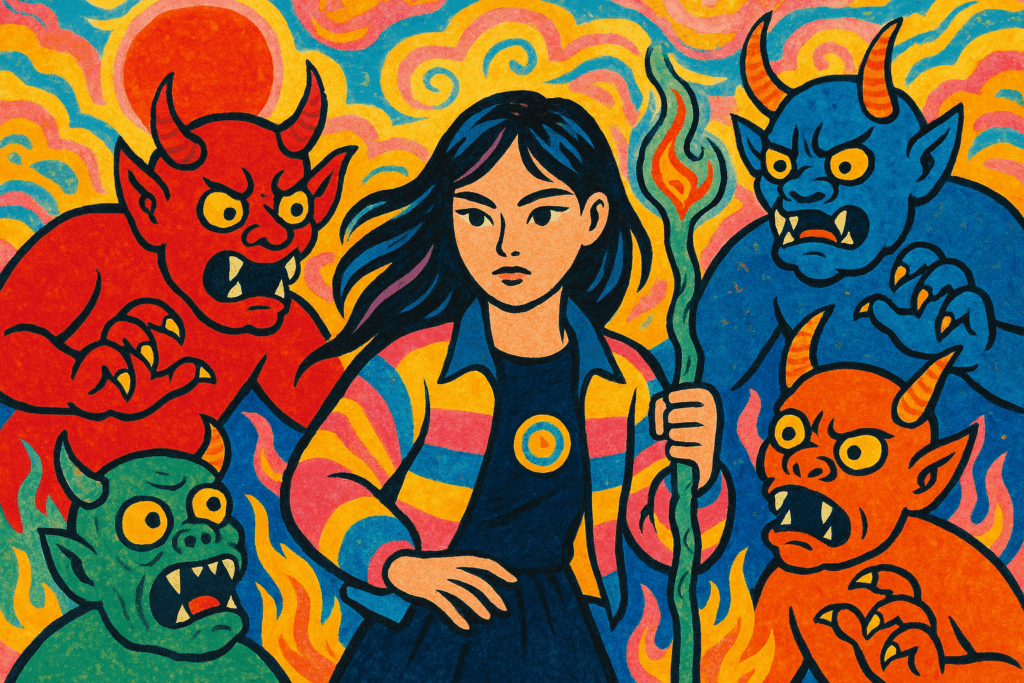
Introduction: KPop Demon Hunters – Redefining the Global Screen
KPop Demon Hunters arrives as more than entertainment. Its fusion of high-energy K-Pop, bold animation and unmistakably Korean folklore marks a moment in the Korean Wave where cultural specificity wins global attention. The film stages identity, music and myth as assets, not exotic details to be smoothed for international tastes.
Folklore Takes Center Stage: Asserting Korean Identity
Visual choices matter. The film foregrounds items such as the gat, the tiger motif and minhwa-inspired patterns to claim aesthetic authority. These symbols do more than decorate scenes. They anchor the story in Korean cultural memory, resisting the tendency to flatten Asian stories into an interchangeable backdrop. For diasporic audiences, that specificity offers validation of lived traditions rather than a tokenized gloss.
Echoes of a Legacy: Women, Music, and Survival
The protagonists in the Huntrix group inherit a lineage of Korean women who used music as public labour and private resilience. From the mid-century Kim Sisters to modern K-Pop idols, women musicians carried national narratives across borders. KPop Demon Hunters recognises that symbolic labour and frames its heroines as heirs to both performance and survival, marrying spectacle with historical weight.
Beyond Soft Power: A New Horizon for Korean Content
Success here shows how Korean culture moves fluidly between music, film and animation while resonating widely. The film has prompted Academy Award conversation and intensified industry focus on authentic voices. It challenges Western storytelling norms by offering a story rooted in local form yet written for global audiences.
Ultimately, KPop Demon Hunters signals a shift in how Korean stories are told and received. By centring folklore, celebrating female musical legacies and empowering diasporic creativity, the film opens space for more nuanced representation and sustained cultural influence on the world stage.