
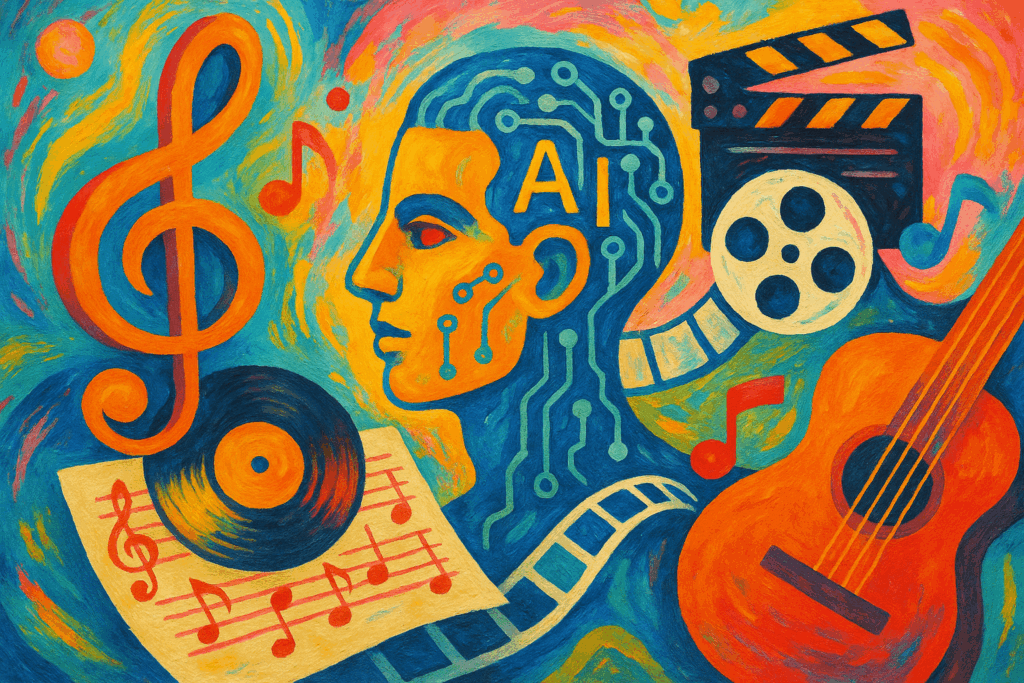
The New Score: AI’s Arrival in Film Music
Artificial intelligence has moved from novelty to practical tool in film and media music. Generative models can produce moods, mock ups and full stems in minutes, letting teams audition dozens of directions fast. Platforms such as AIVA, Amper Music and MusicGen illustrate how composer workflows can include algorithmic sketching, orchestral simulations and unusual sonic textures that would be expensive or slow to realise otherwise.
Creative Tools or Creative Threat?
For many composers and sound designers, AI is a collaborator that accelerates routine tasks and sparks unexpected ideas. It can draft variations, suggest instrumentation, or produce temp tracks that better communicate a director’s intent. Independent filmmakers gain access to sophisticated scoring palettes previously reserved for big budgets.
At the same time, there are serious questions about work displacement, authorship and copyright. Models trained on existing recordings raise legal and ethical issues about source material and attribution. Unions and rights organisations are already pressing for new licensing frameworks. Ultimately, human judgement remains essential to shape emotion, pacing and leitmotifs in ways machines cannot fully replicate.
Shaping Future Soundscapes
Looking ahead, expect more hybrid workflows where composers curate and refine AI output rather than accept it wholesale. That collaboration can free creatives to focus on narrative insight and performance direction while delegating repetitive tasks to software. It will also push the industry to define standards for crediting, compensation and transparent model training.
AI will expand the palette of film music, not replace the need for human storytellers. For studios, indie creators and educators, adopting thoughtful AI practices can increase creative options while protecting artistic labour. At CreativeLDN we see the most promising future as one where technology amplifies human intention and composers remain the final authors of cinematic emotion.