
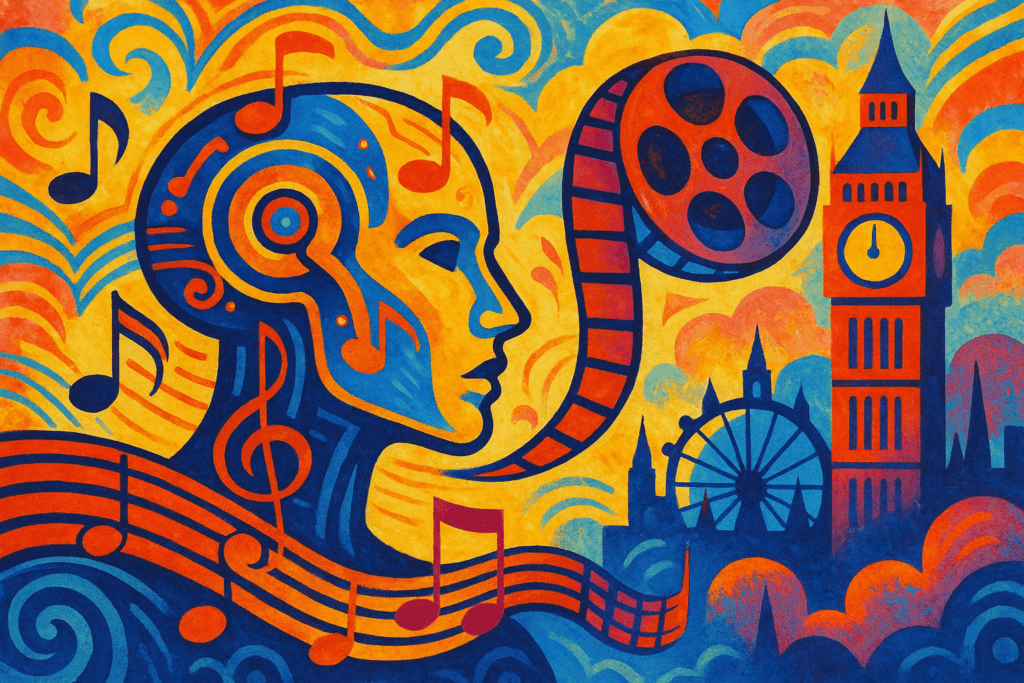
AI’s Evolving Role in Film Music
Artificial intelligence has moved from novelty to practical tool in film scoring. Machine learning models can generate motifs, suggest orchestrations and produce realistic mock-ups that help directors and composers test ideas faster. AI-driven sound design and adaptive scoring systems also open options for interactive and low-budget productions by reducing the time needed to reach a usable draft.
These shifts do not erase human judgment. Narrative intent, emotional nuance and timing choices still rely on composers and directors. At the same time, AI raises questions about data provenance, copyright and authorship that the broader industry must address.
London’s Creative Response to AI Composers
London’s music and film sectors are actively engaging with AI. Conservatoires and university labs are researching algorithmic composition, while studios and post houses run pilot projects to integrate new tools into scoring pipelines. Organisations such as BFI and PRS for Music, alongside academic centres like Goldsmiths and the Royal College of Music, have hosted talks and workshops that bring technologists and composers together.
Practitioners in the city report a spectrum of attitudes: experimentation, cautious adoption and policy-focused debate. Smaller independent filmmakers benefit from faster mock-ups and affordable sound palettes, while established composers test AI to expand their sonic vocabulary without ceding creative control.
Harmonising Human and Artificial Intelligence
The most productive path is collaboration. AI can accelerate ideation, offer fresh timbres and automate repetitive tasks, freeing composers to focus on storytelling, thematic development and director relationships. Practical safeguards include transparent credits, clear licensing for training data and industry standards that define how generated material is used.
For London’s film music scene, the promise is pragmatic: tools that broaden possibility while preserving human authorship. Composers who learn to work with these systems may find new ways to tell stories through sound without losing the craft that makes music memorable.