
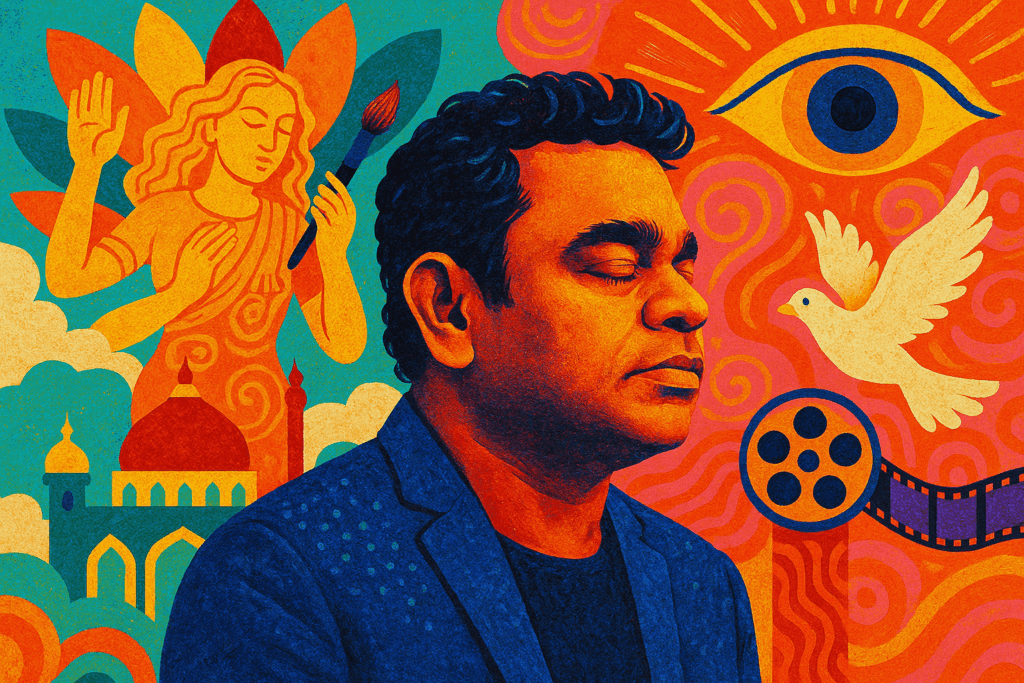
AR Rahman’s Critique: A Call for Creative Reflection in Bollywood
The Maestro’s Unsettling Concerns
AR Rahman, the Oscar winning composer whose scores have shaped modern Indian cinema, recently spoke out about what he described as “uncreative and divisive elements” in Bollywood. He said one of his own compositions had been labeled divisive and suggested that “cabalism” and communal biases were sidelining artists. Coming from a figure of Rahman’s stature, these remarks carry weight beyond a single dispute and signal deeper tensions within the industry.
Beyond Bias: Artistry vs. Industry Formulas
Rahman’s comments highlight a wider struggle: creative freedom clashing with commercial pressure. Large studios and producers often favor formulaic projects that minimize financial risk, which can shrink space for nuanced storytelling and musical experimentation. When industry decision making privileges predictable returns, some works are pushed toward overt messaging or simplified narratives, sometimes described as propaganda films. This environment can marginalize artists whose work challenges mainstream scripts or refuses easy categorization.
A Legacy’s Resonance, An Industry’s Opportunity
Rahman’s legacy gives his critique special significance. As an internationally recognized artist who has collaborated across industries, he speaks from experience inside and outside mainstream Bollywood. His discomfort is not merely personal grievance. It points to institutional patterns that can limit artistic integrity and the cultural role cinema plays.
The implied call to action is for reflection. Bollywood now faces a choice: dismiss concerns as isolated complaints or treat them as a prompt for systemic review. Producers, composers, filmmakers and audiences can help protect creative space by supporting diverse voices, promoting transparent decision making, and valuing artistic risk alongside commercial success. That shift would reaffirm the industry’s capacity to produce work that resonates culturally and artistically.