Reclaiming the Banjo’s Black Roots: The Vision of Hannah Mayree
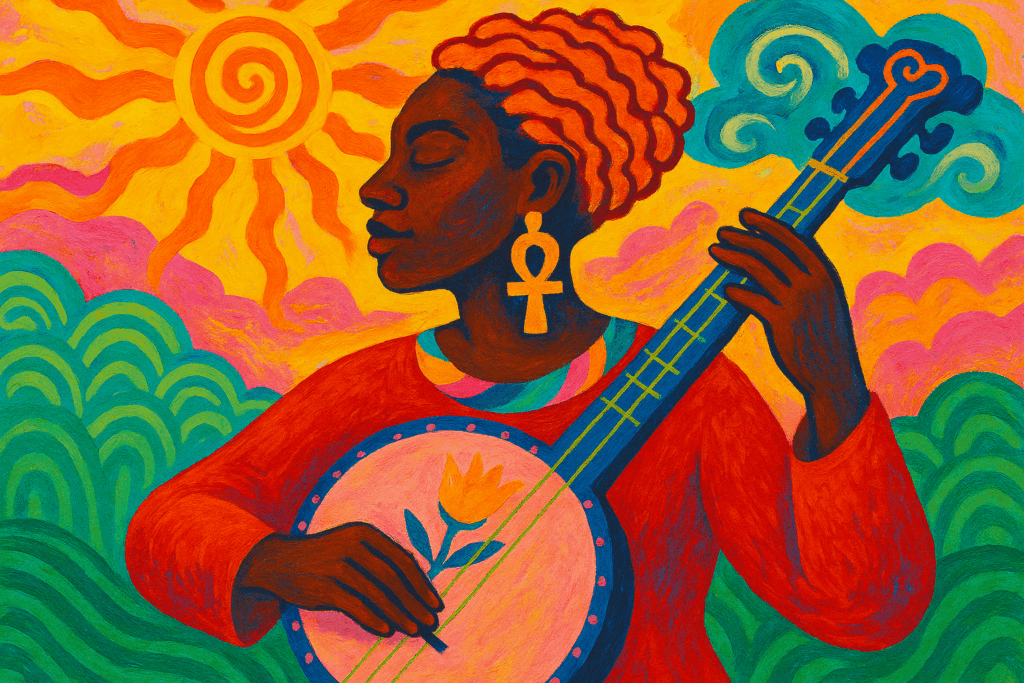
Hannah Mayree is a luthier, performer, and cultural facilitator committed to restoring the banjo to its rightful place in Black musical heritage. Her work with the Black Banjo Reclamation Project brings together traditional craft, historical research, and community practice to confront the instrument’s erasure and appropriation.
A Personal Journey to Ancestral Craft
Mayree began building instruments from gourds, wood, and earthen materials after researching the banjo’s African and Afro-diasporic origins. She rejects the sanitized story that ties the banjo only to minstrelsy and mainstream folk narratives. Instead she traces the lineage of skin, gourd, and twine back to West African prototypes and celebrates the makers and players whose names were lost to history.
The Black Banjo Reclamation Project: Building Community and Heritage
The project teaches instrument making and playing through hands-on workshops, public performances, and collective storytelling. Participants learn to construct banjos using methods informed by African diasporic practices. These sessions place craft at the center of cultural stewardship, making reclamation a living, shared process rather than a purely academic exercise.
Beyond technique, the project addresses how historical disconnection has shaped Black relationships to musical objects. By building instruments together, communities repair links to ancestry and create new ways to pass knowledge forward.
Music, Healing, and Future Generations
Mayree envisions a future where Black luthiers are visible, supported, and celebrated. Her aspiration includes a school for traditional lutherie that trains a new generation of makers who see instrument building as a form of liberation and cultural care. For Mayree, reclaiming the banjo is not only about recovering a history. It is about composing Afro futures through craft, music, and communal healing.
This work transforms an object into a vessel for memory and possibility, reminding us that instruments carry stories and that making can be an act of justice.