Charli XCX’s Trajectory: From Breakthrough to Introspection
Charli XCX arrived as a pop provocateur, moving from mainstream collaborations to hyperpop experiments that reoriented how pop can sound and mean. Her 2022 album BRAT asserted a combative, glossy persona that reclaimed pop excess. Music, Fashion, Film (MFF) arrives as a more introspective follow-up, prompting artists and critics alike to reassess what risk and authenticity mean in contemporary pop.
Music, Fashion, Film: An Experimental Sound & Self-Portrait
MFF trades maximal hooks for a deliberately dry, minimalist palette. Production choices favor clipped rhythms, intimate vocal delivery, and a compositional focus that feels half-confessional, half-conceptual. The result is less about immediate sing-along moments and more about texture and implication. Themes thread through fame, anxiety, and a collapsing boundary between Charli the artist and Charli the constructed persona. Songs operate like short scenes: sometimes ironic, sometimes vulnerable, always self-aware.
MFF as Cultural Mirror: Art, Identity, and Society
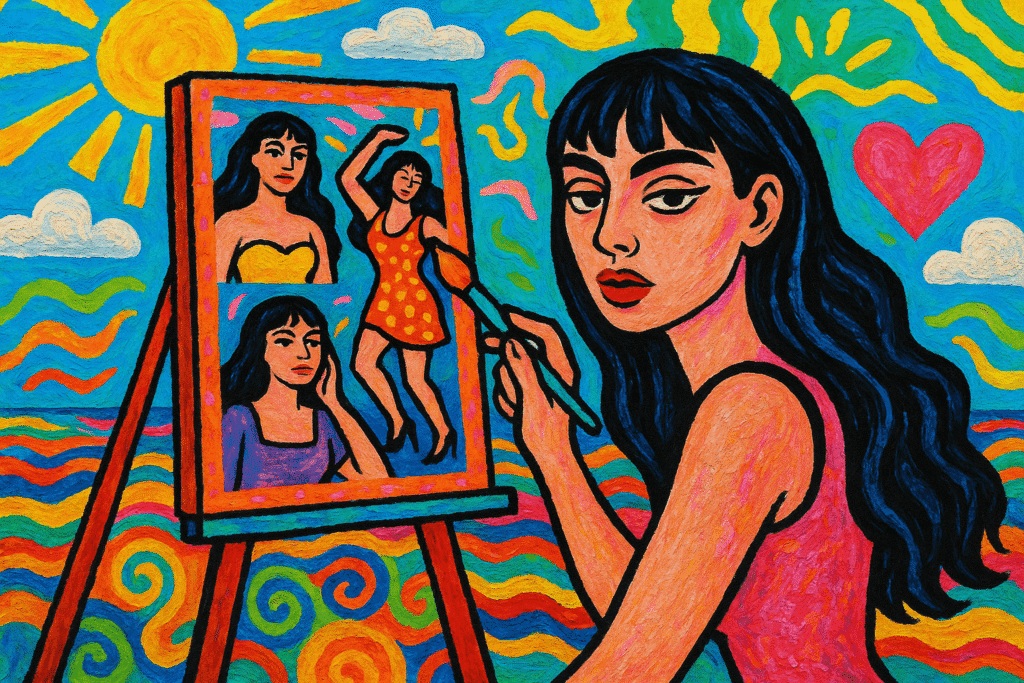
As a cultural object, MFF functions like a mirror held up to our present media climate. Its meta-narratives reflect a moment when artists interrogate fame and identity by turning them into material. For female artists who contend with curated visibility and critique, the album reads as commentary on performance, surveillance, and retreat. Critical reaction has been varied, with some critics praising its intellectual rigor and others missing BRAT’s immediacy. More importantly, MFF has sparked conversation in creative communities about authenticity, persona, and the limits of pop as commentary.
The Future of Pop’s Unpredictable Artist
MFF confirms Charli XCX as an artist willing to recalibrate her sound to ask questions rather than answer them. It suggests a future where her practice will continue to cross disciplines, linking music, fashion, and film not as marketing beats but as modes of storytelling. For creators watching her trajectory, the album offers a model: pop can be playful and scholarly, self-referential and generative. Whether MFF becomes a defining chapter or a provocative detour, it deepens the conversation around what pop can do in an era of reflexive culture.