Sports are no longer limited to a single screen. Digital culture has transformed live events into layered experiences where fans participate in real time, share moments, and shape narratives. For creative professionals this shift creates new formats, revenue models, and cultural touchpoints.
The New Interactive Playbook
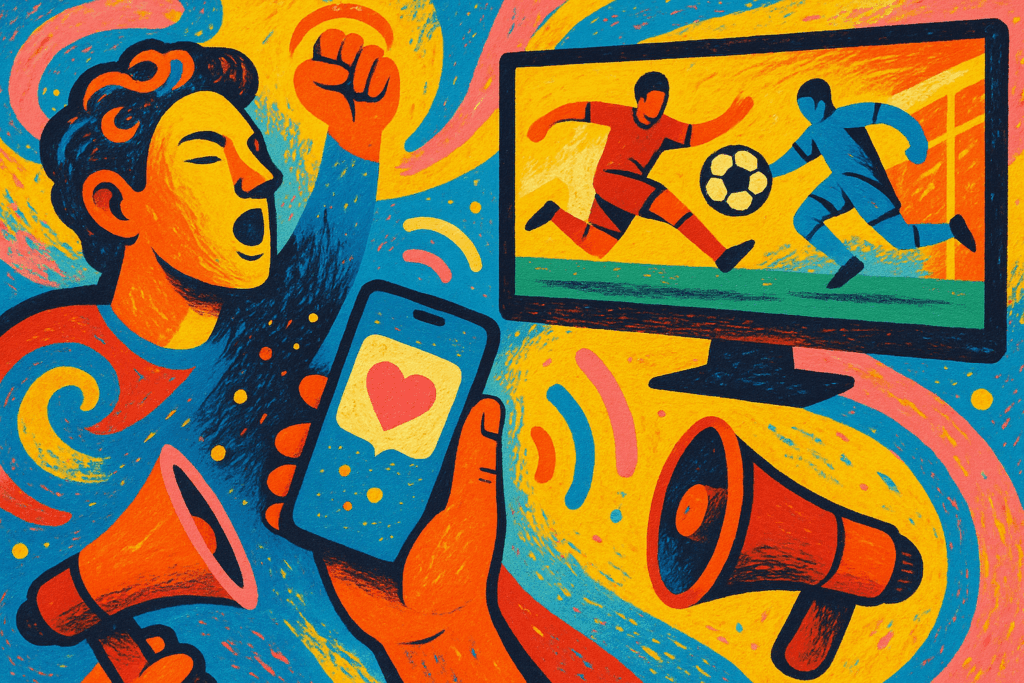
Second-screen behavior is now standard. Fans watch a match while tracking live stats, joining chat threads, voting in polls, and clipping highlights for social. Platforms stream alternative camera angles, in-app replays, and augmented overlays that bring context to every play. That immediacy makes the audience active: micro-communities form around commentary, creators cue rewinds for viral moments, and production teams design modular content for rapid distribution. For media strategists, the priority is building experiences that reward real-time participation and convert attention into repeat visits, subscriptions, or branded moments.
Creative Convergence: Sports, Music, & Media
The boundaries between sport and culture are porous. Artist performances, athlete-curated playlists, and co-produced video content turn games into cultural events beyond the scoreboard. Brands and agencies are partnering with musicians and creators to produce soundtracked ads, halftime integrations, and social-first mini-documentaries that reach younger, cross-platform audiences. For creators the opportunity is to craft sonic identities, short-form edits, and live mixes that amplify emotional peaks. Media teams can stage moments that live on as shareable content, turning single events into sustained storytelling campaigns.
The Personalized Fan Journey
Personalization drives retention. Data allows platforms to surface tailored highlights, commentary language, favourite-player alerts, and exclusive backstory content. Fans expect contextual updates that match their fandom level, from bespoke highlight reels to subscription tiers with deeper access. That opens avenues for content creators and agencies to produce segmented creative assets, bespoke sponsor integrations, and serialized narratives that follow the fan beyond the final whistle.
Live sports today mirror broader digital entertainment: interactive, culturally layered, and constantly repackaged. For creative professionals, the task is to design moments that travel across devices, unite music and media with sport, and turn fleeting attention into ongoing cultural value.