EWC Urges Stronger EU Support for Writers Amid AI Challenges
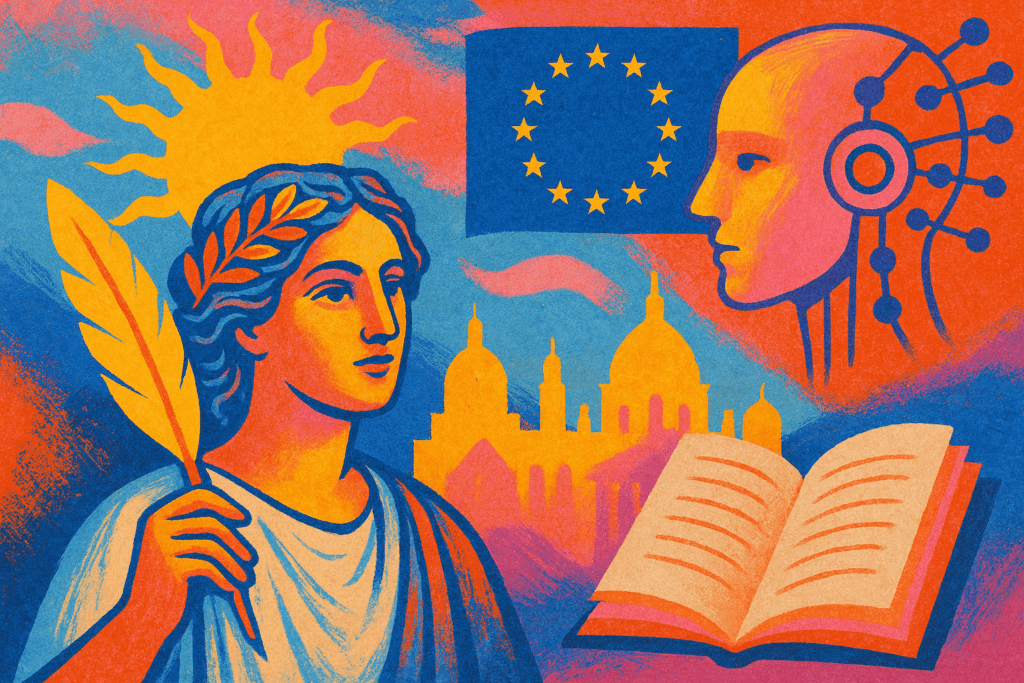
The European Writers’ Council (EWC) has outlined a policy roadmap asking the EU to back writers and the cultural sector with targeted funding and legal safeguards as artificial intelligence reshapes creative work. The submission frames writers as essential to cultural diversity, public debate, and democratic life across Europe.
Writers: The Bedrock of European Culture and Democracy
The EWC argues that authors are not interchangeable content suppliers. Their work sustains languages, reflects local perspectives, and holds power to account. Protecting writers safeguards cultural plurality and helps prevent a homogenised public sphere driven by a few global tech platforms.
A Call for Robust Funding and Fair Practice
Safeguarding Human Creativity in the Age of AI
AI systems increasingly use existing texts to learn and generate content. The EWC wants clear rules so that training on copyrighted works requires consent and fair compensation. Proposals include licensing frameworks, stronger enforcement of authors’ rights, transparency from AI developers about training data, and human oversight where AI outputs build on creative works.
Streamlining Access for All Cultural Initiatives
On funding, the EWC seeks a stronger, more visible role for cultural programmes within the Multiannual Financial Framework and for AgoraEU to prioritise writers and small organisations. Recommendations focus on ring-fenced budgets for literary translation, living wages for creators, microgrants, and simplified application processes so regional and independent initiatives can compete fairly.
Shaping Europe’s Cultural Future
The EWC presents a forward-looking case: public funding and legal safeguards are investments in democratic culture and resilience. Policymakers are urged to treat writers as partners in shaping how AI is used in the creative sector, rather than collateral in a tech-driven transition. Practical measures proposed by the EWC aim to keep creative work visible, remunerated, and free to reflect Europe’s linguistic and cultural variety.
For writers and cultural professionals, the message is clear. Public policy can tip the balance toward pluralism, fairness, and human-centred creativity as AI grows in influence.