The Ubiquitous Icon on Display
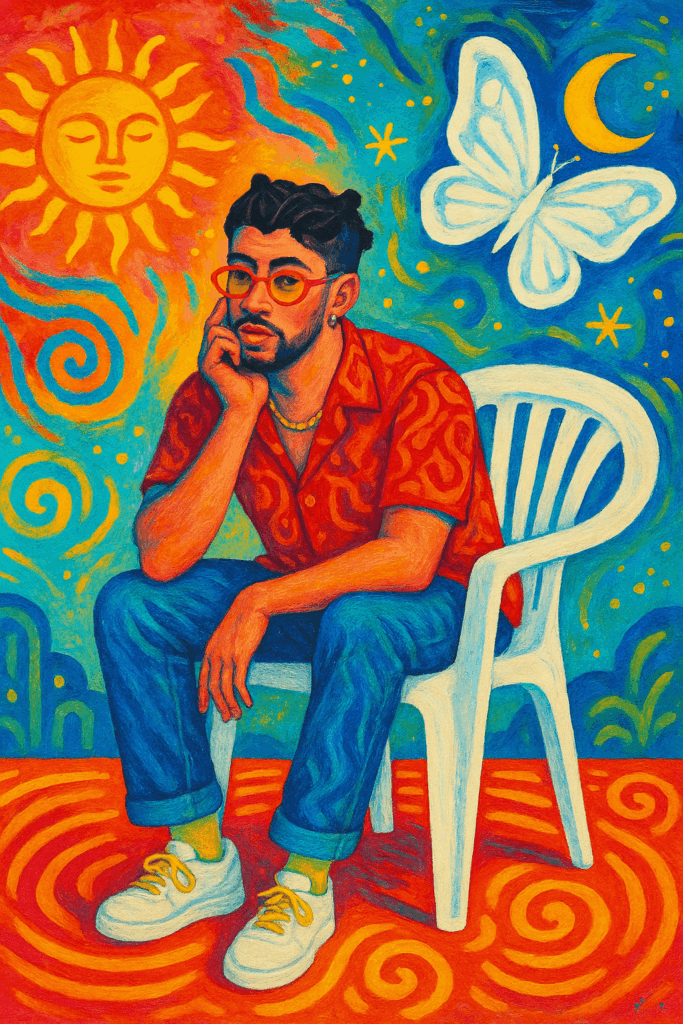
When Bad Bunny placed simple plastic chairs on his album cover, he turned an everyday object into a visual headline. The monobloc chair is instantly familiar across continents. Its presence on the cover reads as home, community and ordinary life, an image any listener can map onto memory and place.
More Than Furniture: A Global Symbol
The monobloc is a single-piece, injection-molded plastic chair that is cheap and widely available. That accessibility made it a stage for shared moments: family meals, street corners, backyard gatherings. In places like Puerto Rico the chair carries added resonance as a domestic signifier and an emblem of communal resilience. Globally it has become the “everychair” that signals informal public life.
A Legacy of Innovation and Dilemma
Designers praise the monobloc for its manufacturing simplicity and democratic reach. Its basic form, repeatable at mass scale, made seating affordable around the world. The flip side is the environmental toll. Most are made from polypropylene, a durable but often unrecycled plastic. The chair embodies a modern tension: design that widened access now faces critique for contributing to throwaway consumption and waste.
Enduring Impact
Bad Bunny’s use of the chair is more than aesthetic. It amplifies how ordinary objects carry social meaning and can signal identity, memory and place. The monobloc remains a study in contradictions: elegant in its pragmatic logic, problematic in its ecological footprint. As a cultural icon it reminds us that design tells stories about who we are and what we value.
In the space of a single cover image, a humble plastic chair reconnects pop culture and design debate, asking readers to look again at the objects that shape daily life.