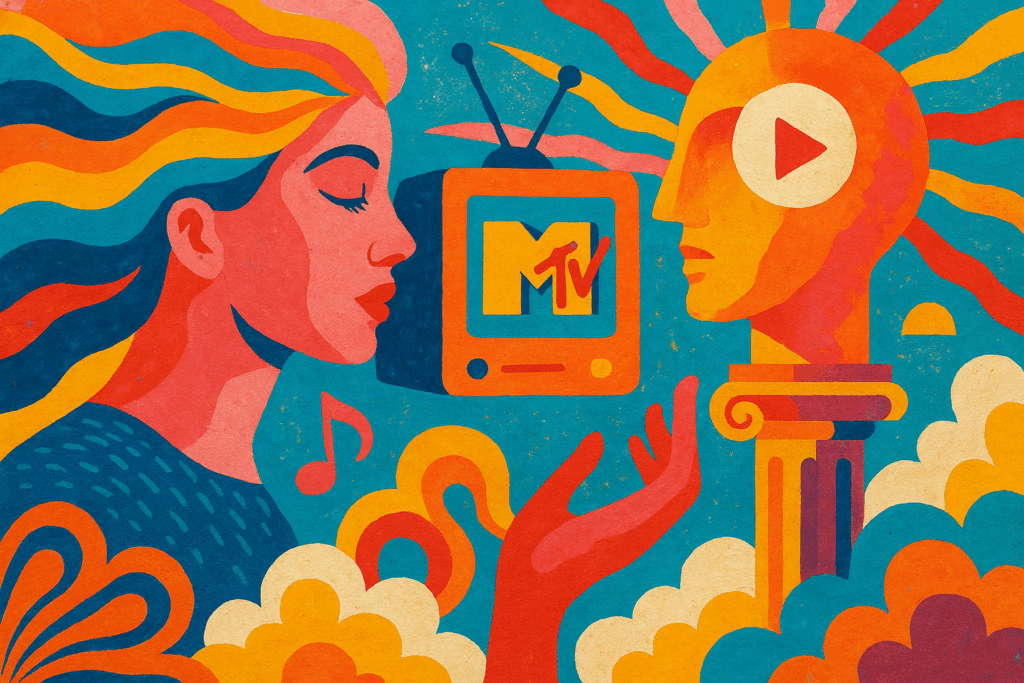
MTV once acted as a central transmitter of sounds and images, turning music videos into must-see television and creating shared cultural moments. That era shaped fashion, slang, and collective memory. Today the music video lives across YouTube, TikTok and streaming platforms, where algorithmic recommendation and short-form formats reorder audience attention.
MTV: A Unifying Cultural Force
In its heyday MTV curated what millions watched at roughly the same time. VJs, countdowns and heavy rotation turned a handful of videos into national talking points. That gatekeeping had limits: playlists favoured certain labels and aesthetics, and many voices remained marginalised. Still, the channel produced a common language that made new releases feel like public events.
The Digital Dispersal: Algorithms and Personalisation
The internet ended appointment viewing. YouTube gave on-demand access and a long-tail of content, while TikTok foregrounds brevity and replicable formats. Recommendation systems now decide what surfaces, optimising for engagement, watch time and shareability. The result is a fractured attention economy: audiences fragment into niche communities and micro-cultures rather than gathering around a single mainstream.
A New Landscape for Creators and Culture
The shift carries clear trade-offs. Losses include fewer shared cultural landmarks and a weakening of collective memory. Gains include wider access for independent voices, faster discovery beyond gatekeepers, and multiple routes to monetise work.
- Visibility: Algorithms can lift unknown artists quickly, but visibility is often fleeting.
- Representation: More creators find audiences outside traditional industry channels.
- Legacy: Building lasting cultural impact is harder when moments are personalised and short-lived.
For creative professionals the task is to combine craft, platform literacy and community-building. That means creating work with layered meaning, using formats that reward repeat engagement, and staging occasions that can cut across algorithmic silos. Mainstream culture no longer looks singular. It is a chorus of overlapping scenes, and success will favour those who can make noise that resonates across several of them.