Capturing 2004: A Designer’s Challenge
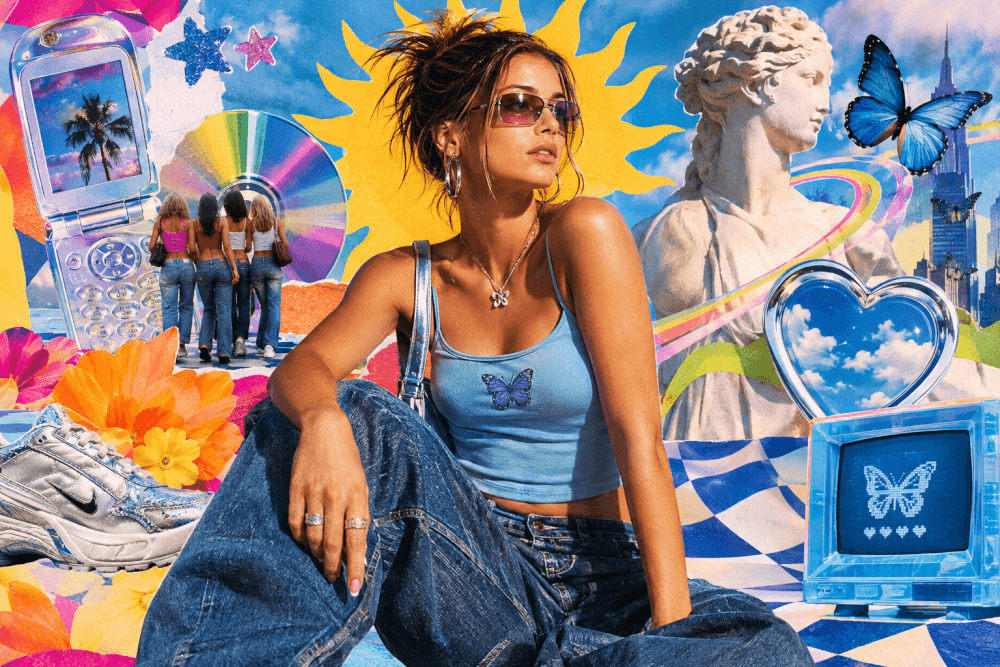
For Netflix’s The Body, costume designer Mirren Gordon-Crozier had to make 2004 feel immediate and recognisable. With a personal connection to the era, she used memory and research to build wardrobes that read as lived-in rather than museum pieces. The brief was simple on paper and complex in practice: make the clothes tell who these characters were in a very specific moment of pop culture.
Uniforms, Rebellion, and Iconic Bags
Designing for a Catholic high school meant working within strict uniforms, so personality appears in the details. Altered hems, layered knits, and carefully chosen accessories became shorthand for rebellion. Designer bags function as status markers in the show. Pieces like the Balenciaga City, Dior Saddle, and Louis Vuitton Pochette are used sparingly but with intent, signalling taste, aspiration, and social position without shouting.
Crafting Character Through Y2K Trends
Gordon-Crozier leaned on celebrity references to shape individual styles. Anya wears silhouettes that nod to Mischa Barton and Sienna Miller, giving her an understated cool. Maddie draws on the brighter, girl-next-door energy of Hilary Duff, with pop-ready colours and midriff-forward fits. Elise’s wardrobe tips toward avant-garde labels, marking her as an outlier who borrows the era’s edgier codes.
The “Tacky” Dance Costumes
One of the smartest moves in the series is the unabashed embrace of era-specific kitsch in the dance competition looks. The costumes reference a mix of Chloë Sevigny-style irony and the cheesy sexiness of Hooters-adjacent tights. They are meant to feel over the top, because that overtness helps explain how characters present themselves and how community rituals looked in 2004.
By aligning wardrobe choices with character psychology and cultural signposts, The Body turns Y2K fashion into a storytelling device. The result is nostalgia with teeth: familiar, specific, and telling.