Weaving Heritage into Modern Living
Born in Yunnan and educated between New York and Los Angeles, Xiaodi Xie approaches design as cultural mediation rather than ornament. Her work arises from lived experience: memories of landscape, ritual, and craft are organized into visual logic that belongs in daily life. YarnGi, the home decor brand she co-founded, makes that philosophy tangible. Pillows, throws, and textiles become repositories of story and tactility, inviting touch while carrying a clear design grammar. Increasingly visible in curated interiors, YarnGi appeals to designers and collectors who seek pieces that feel both rooted and contemporary.
Trace-Form Design: A Method for Meaningful Translation
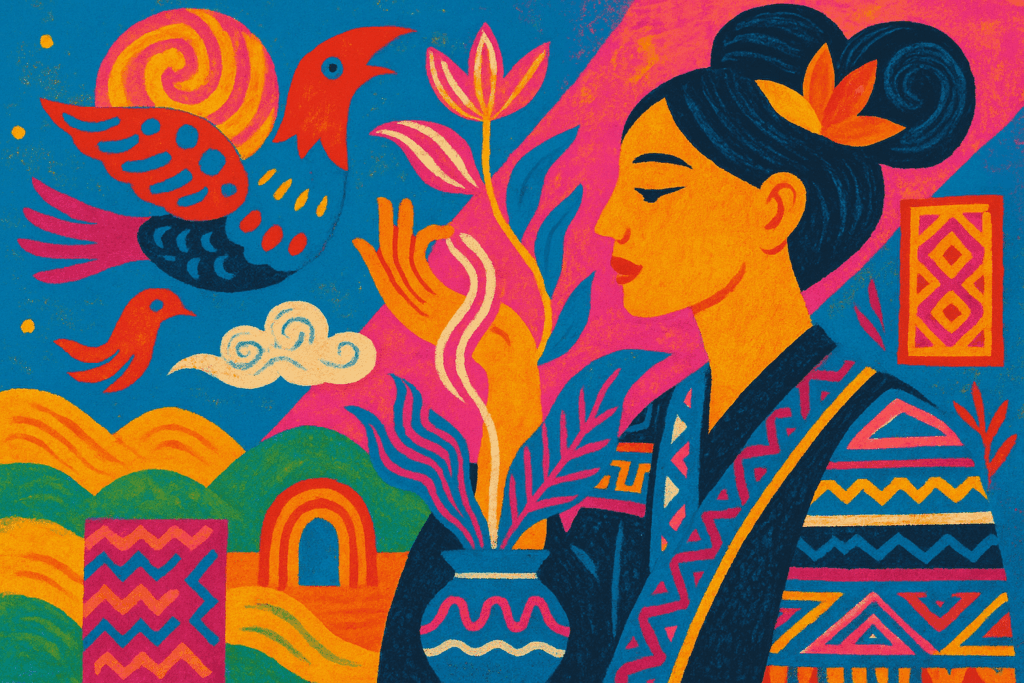
Trace-Form Design is Xie’s systematic method for turning complex cultural contexts into functional objects. Rather than quoting motifs as surface decoration, the method reads cultural traces as structural cues. Visual structure, material logic, and intended use are layered together so a pattern, color field, or weave becomes a translated element of meaning. Collections draw from Yunnan references such as Yi totems and Hani rice terraces, but they do not replicate ethnographic detail. Instead they abstract rhythm, scale, and warmth into repeatable forms and textures that work with contemporary interiors. The result is a scalable design language: products that carry cultural resonance without pastiche, and that invite conversation through everyday use. Trace-Form functions as both research practice and production framework, helping YarnGi retain authenticity while adapting to new contexts.
Design as a Bridge for Global Understanding
Xie’s practice positions design as a connective force. By translating rather than copying, YarnGi supports cultural continuity and fosters respectful exchange. The brand’s values—Rooted, Authentic, Refined, Crafted—operate as lived practices: provenance in material choices, clarity in form, and fidelity to the original spirit of reference. In this way, Trace-Form Design offers a model for designers who want to create objects that carry heritage forward into shared, contemporary settings.