
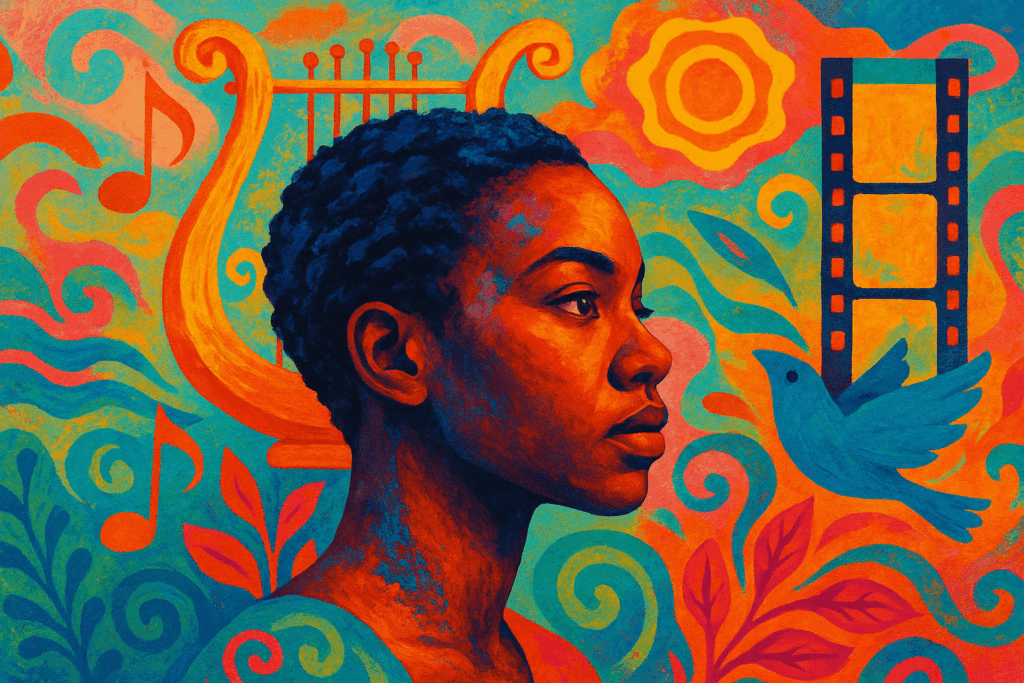
What is Ethnomusicology in Film?
Ethnomusicology explores the relationship between music and culture, studying musical traditions within their social and cultural contexts. In the realm of film, it guides composers and filmmakers to create scores that resonate authentically with the cultural landscapes depicted on screen.
Beyond Stereotypes: Authentic Storytelling
Historically, many film scores have relied on clichéd or stereotypical representations of cultures, leading to misinterpretations and cultural misappropriation. An ethnomusicological approach encourages a thoughtful and respectful engagement with cultural music forms, helping avoid superficial portrayals and fostering genuine storytelling.
Zipho Memela: A Creative Model for Cultural Fusion
South African artist Zipho Memela exemplifies ethnomusicology’s principles through his multidisciplinary work. Combining genres like hip-hop with traditional elements and participating in projects such as the Vivaldi Project, he bridges diverse musical worlds. His work highlights the possibilities of innovation rooted in cultural understanding, showing how artists can honor traditions while expanding creative boundaries.
Crafting Meaningful Film Scores
For film composers and creatives, Memela’s career offers valuable lessons on cultural fusion and innovation. Embracing ethnomusicology involves more than incorporating exotic sounds; it requires in-depth research, collaboration with cultural insiders, and a commitment to ethical artistic practice. This approach results in film scores that are not only sonically engaging but also culturally responsible and resonant with global audiences.
As cinema continues to globalise, ethnomusicology provides a framework for composers to contribute thoughtfully to storytelling. Zipho Memela’s example encourages creatives to view cultural diversity as a source of inspiration rather than a superficial embellishment, ultimately enriching the art of film music.