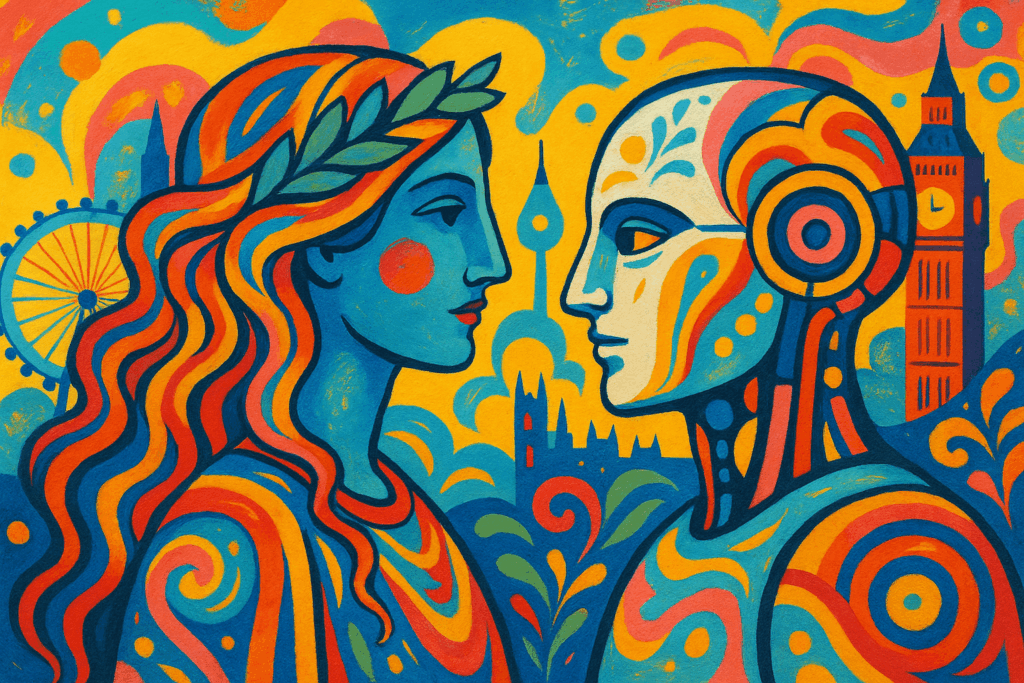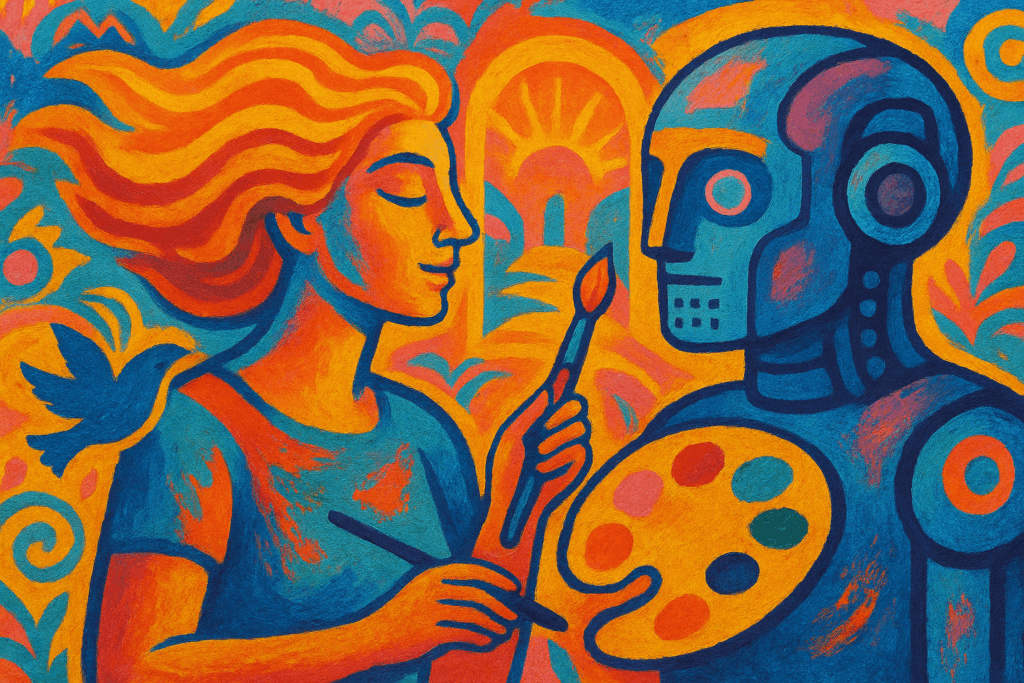
The moment AI moved from a passive tool to an active collaborator has opened a new chapter in digital art. Artists in London and beyond are working alongside systems that generate ideas, suggest forms, and iterate visual language, while human makers set intent, curate outputs, and shape meaning.
The evolving canvas: how artists collaborate with AI
AI co-creation typically means systems generate concepts, variations, textures, or compositions that an artist then edits, mixes, or reframes. This is often done through generative models, interactive assistants, or algorithmic pipelines that respond to prompts and feedback. The relationship is iterative: the artist nudges the model, reviews results, refines instructions, and blends machine suggestions with handcrafted interventions.
Redefining the artist’s role
Artists are no longer only makers of output; they are curators, prompt specialists, and conceptual directors. Skills such as prompt design, model selection, and a critical understanding of biases and limitations are becoming part of the contemporary practice. These roles amplify expressive possibilities while asking creators to develop fluency with new workflows.
Impact and future prospects
Human-AI partnerships accelerate experimentation, reveal novel aesthetic directions, and lower the barrier to exploring complex styles. Debates about authorship and ownership will continue, but practical benefits are clear: faster iteration, richer palettes of variation, and hybrid works that combine computational processes with human intent. In London, galleries and studios are already showcasing pieces born from these collaborations.
Conclusion: Co-creation with AI is expanding what art can be. By balancing technical literacy with artistic judgment, creatives can use AI to open new creative horizons while keeping human perspective central. The next wave of digital art will be defined by these partnerships, where technology and human imagination shape culture together.