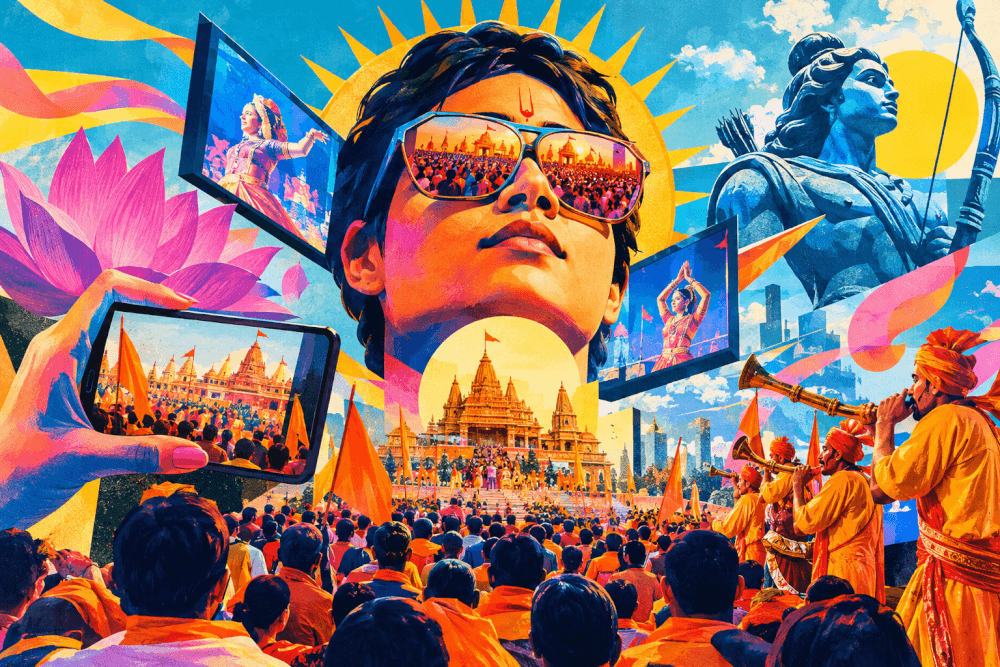
Politics is often performance as much as policy. In Spectacle State, Dr. Brahma Prakash argues that some political projects turn culture, ritual and emotion into instruments of authority. Using Hindutva in India as a primary example, the book shows how everyday practices are staged and circulated to reframe loyalty, belonging and legitimacy.
Culture as a Tool of Power
Political movements repurpose festivals, rituals and familiar objects into public theatre. A temple procession, a neighbourhood celebration or even a municipal bulldozer can be staged as a symbol of moral renewal. When these acts are repeated and amplified by media, they become normalized. What was once private or civic turns into a declaration of authority that narrows what counts as belonging. Through careful choreography, symbolic acts make exclusion appear ordinary and make coercion feel sanctioned.
The Emotional and Aesthetic Grip
Spectacle works by shaping how people feel. Music, film and staged rallies shape moods and forge collective identities. Hindutva pop music and patriotic film scores, for example, turn political messages into pleasurable cultural forms. Enjoyment can lower critical guardrails: songs, slogans and visuals embed political narratives inside emotion and aesthetics. Social media and broadcast channels multiply these effects, turning local performances into mass experiences that blur the line between cultural expression and political persuasion.
Finding Resistance in the Everyday
Resistance often begins with attention. Reading how cultural mechanisms operate makes it easier to question grand narratives. Alternative playlists, independent film, community rituals and everyday conversations are small but potent sites of pushback. Cultural industries can be co-opted, but they can also be reclaimed. Supporting plural voices, interrogating media messages and keeping civic spaces open for diverse expression helps unsettle spectacle-driven claims to legitimacy.
Understanding the Spectacle State equips professionals in film, music and media to spot when creativity is being used to consolidate power and to imagine cultural practices that strengthen openness rather than narrow it.