
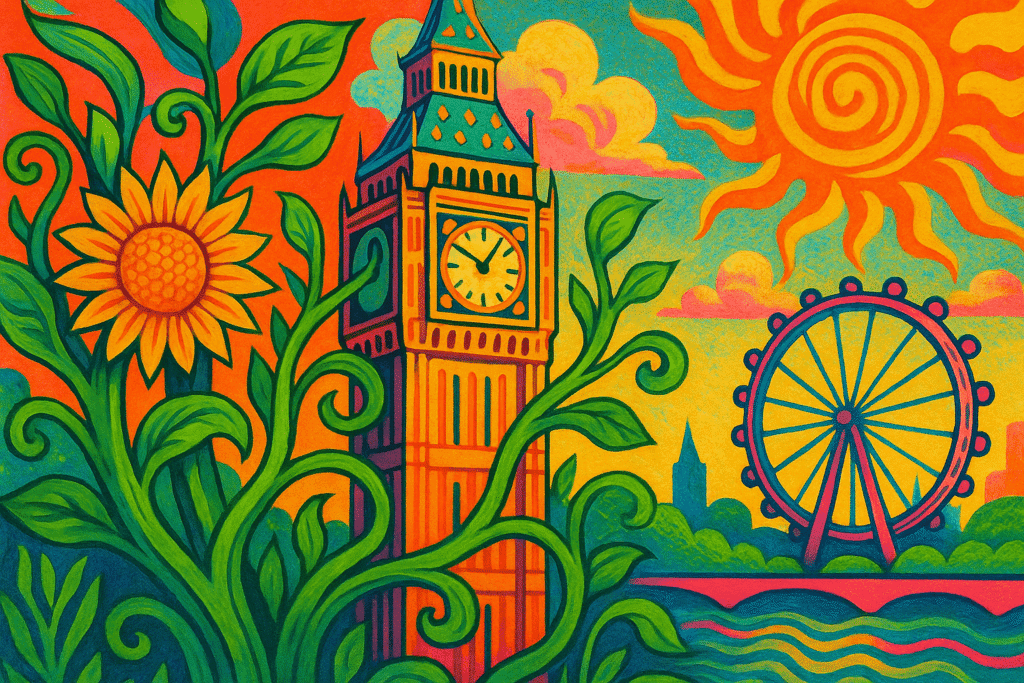
London’s Sustainable Design Surge
London’s design scene is shifting from novelty to norm as sustainability informs aesthetics, material choices and urban planning. From Clerkenwell showrooms to the regenerated banks of King’s Cross, green design is visible across public squares, workplaces and fashion ateliers. This movement reflects a creative city culture that prizes craftsmanship, reuse and visible ecology.
Key Trends and Innovations
- Adaptive reuse and craft-led regeneration. Coal Drops Yard in King’s Cross is a headline example of turning Victorian industrial fabric into contemporary retail and public realm while keeping history in view. Similar projects across Shoreditch and Clerkenwell convert warehouses into studios, prioritising materials retention over demolition.
- Upcycled and reclaimed materials. Designers and makers are foregrounding reclaimed timber, salvaged brick and upcycled textiles. London-based brands such as Elvis & Kresse reclaim industrial waste for premium products, while showrooms in Clerkenwell showcase furniture made from recycled components.
- Biophilic design and urban nature. New developments integrate planted courtyards, green roofs and tree-lined routes to improve wellbeing and microclimates. Granary Square and nearby public spaces in King’s Cross demonstrate how landscape-led design can stitch ecology into city life.
Impact on City Style and Culture
Sustainability has become a visible style language. Shopfronts in Shoreditch favour raw, tactile finishes; restaurants and offices celebrate second-life fittings; galleries and cultural institutions commission installations that highlight circular methods. Ethical fashion labels, repair workshops and material libraries are changing consumer expectations, making longevity and provenance central to London taste.
The Future is Green in London
London’s creative ecosystem positions it as a testing ground for new sustainable design practices. Expect more circular retail models, public spaces that prioritise biodiversity, and collaborations between architects, makers and cultural institutions. For creatives and residents, the result is a city where sustainability is not only practical but increasingly stylish and distinctly London.